Frankfurt vs Munich for Business: Complete Cost & Market Comparison
by S&S Consult
The decision between Frankfurt and Munich represents more than choosing a pin on a map. For foreign entrepreneurs entering the German market, this choice shapes everything from operational costs to business culture, from talent pools to daily quality of life. Both cities claim the title of Germany's economic powerhouse, yet they offer distinctly different experiences for business owners.
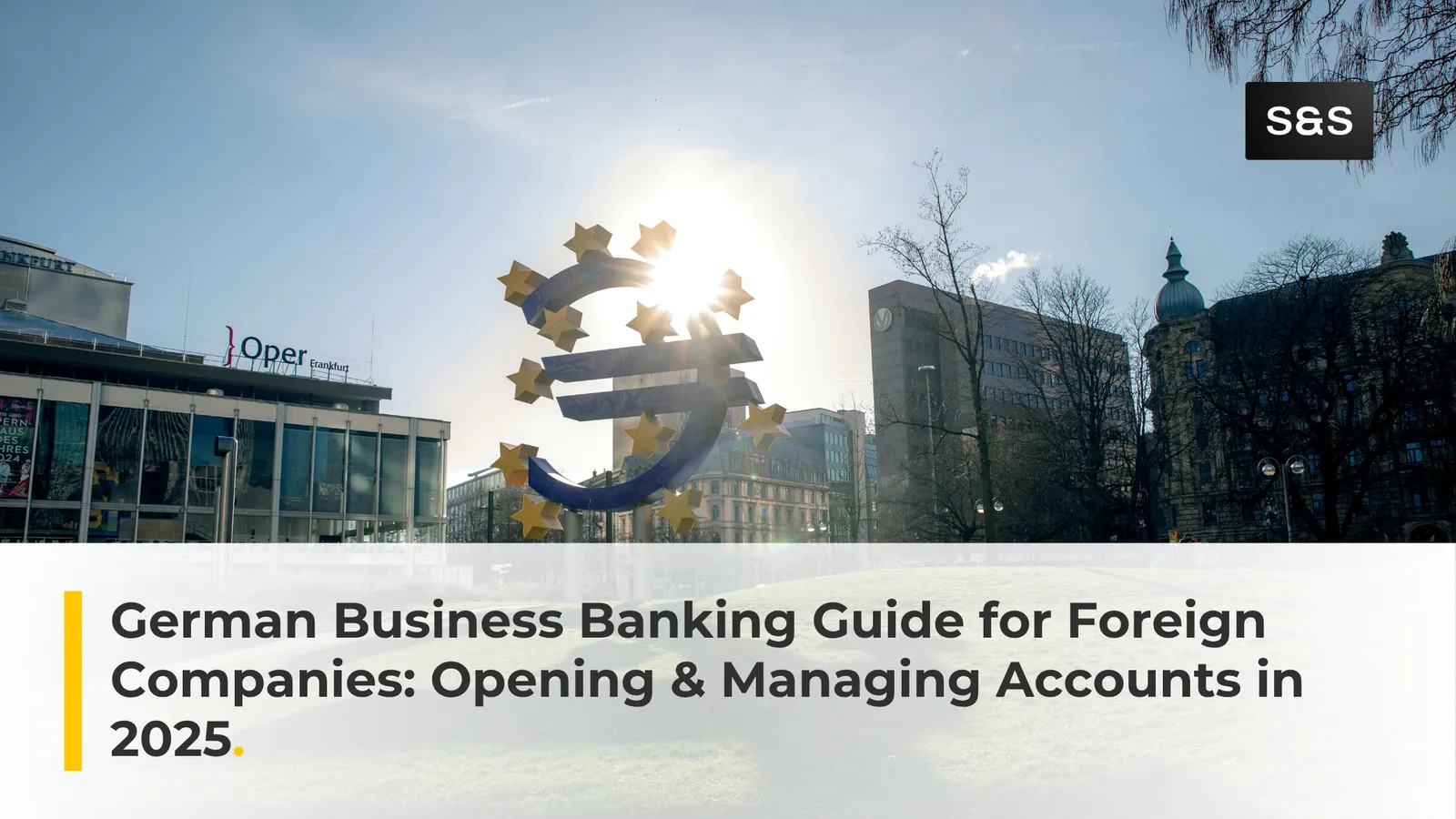
Frankfurt pulses with the rhythm of international finance, its skyline dominated by glass towers housing the European Central Bank and global banking institutions. Munich radiates a different energy—technology companies nestled between baroque architecture, a blend of traditional Bavarian culture and cutting-edge innovation. The question isn't which city is better, but which aligns with the specific needs of your business and life.
The Business DNA: Understanding What Drives Each City
Frankfurt's identity centers on finance, logistics, and international connectivity. The city serves as Europe's financial nerve center, with the Frankfurt Stock Exchange processing more securities transactions than any other German exchange. The presence of the European Central Bank, Deutsche Bundesbank, and headquarters of major German banks creates an ecosystem where financial expertise flows naturally. Trade fairs dot the calendar year-round, drawing international business to Messe Frankfurt, one of the world's largest exhibition centers.
This international orientation permeates the business culture. English dominates many corporate environments, particularly in finance and consulting. The city's position as a major transportation hub—Frankfurt Airport ranks among Europe's busiest—means connections to global markets happen daily, quite literally. Companies requiring frequent international travel or those in logistics, pharma distribution, or financial services often find Frankfurt's infrastructure indispensable.
Munich tells a different economic story. The city anchors Germany's technology and industrial innovation, home to corporate giants like BMW, Siemens, and Allianz. The technology sector thrives here, with a vibrant startup ecosystem supported by proximity to Ludwig-Maximilians-Universität and Technische Universität München. Research institutions and tech companies create a knowledge cluster that attracts talent in engineering, software development, and life sciences.
The Bavarian capital's business culture carries more traditional German characteristics than Frankfurt's international atmosphere. While English proficiency remains high, particularly in tech companies, German language skills matter more for networking and client relationships. The city's economic diversity—spanning automotive, aerospace, insurance, biotechnology, and media—creates opportunities across multiple sectors but also means navigating more varied business cultures.
The Numbers That Matter: Cost of Doing Business
Office space costs reveal immediate differences. In Frankfurt's financial district, premium office locations command between €30 and €45 per square meter monthly. Moving to less central business areas like Westend or Bockenheim brings costs down to €18-€28 per square meter. Shared office spaces and co-working environments typically range from €300 to €600 per person monthly, depending on amenities and location.
Munich's office market reflects its consistent demand and limited availability. Central business district offices, particularly around Maximilianstraße or the area near Marienplatz, reach €35-€50 per square meter monthly. Even secondary locations in Schwabing or near the universities rarely drop below €25 per square meter. Co-working spaces mirror these premiums, generally starting at €400 monthly and climbing past €700 for prime locations with full amenities.
Residential costs affect business decisions more than many entrepreneurs anticipate. Employee relocation, your own housing, and overall cost of living impact salary negotiations and talent retention. Frankfurt offers more moderate housing costs relative to income levels. A decent one-bedroom apartment in a good neighborhood typically rents for €1,100-€1,500 monthly. Three-bedroom apartments suitable for families range from €1,800-€2,500, though prices climb steeply in sought-after areas like Sachsenhausen or Nordend.
Munich's housing market operates under intense pressure. That same one-bedroom apartment costs €1,400-€1,900 monthly, while family-sized three-bedroom units start around €2,200 and frequently exceed €3,000. The situation grows more challenging for purchases—Munich property prices often surpass €8,000 per square meter in desirable districts, compared to Frankfurt's €5,000-€7,000 range.
Salary expectations reflect these cost-of-living differences, though not proportionally. A mid-level professional in Frankfurt might expect €50,000-€70,000 annually, while Munich equivalents command €55,000-€75,000. Senior roles show wider gaps—Frankfurt senior managers typically earn €80,000-€120,000, while Munich counterparts often see €90,000-€130,000. Technology specialists, in particularly high demand in Munich, can command premiums of 15-20% over Frankfurt comparables.
The practical impact extends beyond base salaries. Social security contributions, mandatory health insurance, and pension contributions add approximately 20% to gross salary costs for employers. These remain consistent across German cities, but the base salary differences compound. A Munich-based company might find total employment costs for a five-person team running €30,000-€50,000 higher annually than the Frankfurt equivalent.
Industry Ecosystems: Where Sectors Thrive
Financial services businesses gravitate naturally toward Frankfurt. The concentration of banking expertise, regulatory proximity to the ECB, and established networks make launching a fintech, financial advisory, or investment service significantly smoother. The existing ecosystem means potential clients, partners, and talent already cluster in the city. Regulatory compliance expertise, auditing services, and specialized financial lawyers maintain offices here precisely because demand concentrates so heavily.
Life sciences and pharmaceutical companies face an interesting split. Frankfurt's strength in logistics makes it attractive for distribution and supply chain operations, particularly for companies serving European markets. The airport's pharma-handling infrastructure and cold chain capabilities are world-class. Munich, however, dominates in biotech research and medical technology development, with research institutions and university partnerships driving innovation.
Technology companies must weigh different factors. Munich's startup ecosystem offers more maturity, better venture capital access, and deeper technical talent pools, particularly in engineering and deep tech. The city's universities produce steady streams of qualified graduates in technical fields. Frankfurt's technology scene, while growing, centers more on fintech and business services technology rather than hardware or deep technical innovation.
Consulting and professional services find fertile ground in both cities but with different client profiles. Frankfurt consultants often serve financial services clients or companies with international operations. Munich's diverse industrial base means consultants might work with automotive suppliers, insurance companies, or technology firms—requiring broader sectoral knowledge but offering more varied project work.
Daily Life: The Human Element of Business Decisions
Quality of life weighs heavily when relocating internationally. Munich consistently ranks among Europe's most livable cities, earning this reputation through green spaces, cultural amenities, and Alpine proximity. The English Garden sprawls larger than New York's Central Park through the city center. Weekend mountain excursions become routine—the Alps rise less than an hour's drive south. Cultural institutions from the Pinakothek museums to the Bavarian State Opera provide world-class arts access.
This quality commands a premium. Beyond housing costs, daily expenses run higher. A meal at a mid-range restaurant averages €15-€25 per person in Munich versus €12-€20 in Frankfurt. A monthly public transportation pass costs €64.20 in Munich, €88 in Frankfurt, though both systems offer excellent coverage. Gym memberships, childcare, and international schools all trend 10-15% higher in Munich.
Frankfurt offers different lifestyle advantages. The city's compact size and efficient public transport mean short commutes—most residents reach the city center within 30 minutes. International connections extend beyond business; the city's diverse population creates multicultural neighborhoods where newcomers find community more easily. The Main River, surrounding Taunus hills, and nearby Rhine Valley provide natural recreation, if not quite matching Alpine grandeur.
Social integration patterns differ notably. Frankfurt's international business community creates ready-made networks for newcomers. Expat groups, international social clubs, and English-speaking activities abound. Munich requires more patience and German language investment for deep social integration, though the payoff often comes in richer connection to German culture and stronger local business relationships.
The Education Factor: Families and Talent Development
International schools serve both cities well, crucial for relocated families. Frankfurt hosts several excellent options including Frankfurt International School and Metropolitan School, with tuition ranging from €12,000-€25,000 annually depending on age and program. Munich's international school landscape includes Munich International School and Bavarian International School, typically commanding €15,000-€28,000 yearly.
The university landscape influences talent recruitment and company innovation strategies. Munich's Ludwig-Maximilians-Universität and Technische Universität München rank among Germany's top institutions, producing graduates in engineering, computer science, and business administration. Companies benefit from recruiting partnerships, research collaborations, and access to working students. Frankfurt's Goethe University and Frankfurt School of Finance & Management excel particularly in business, economics, and finance programs, creating targeted talent pipelines for relevant sectors.
Market Accessibility and Growth Potential
Geographic position affects market reach. Frankfurt's central location and transportation infrastructure make reaching other German cities and European markets straightforward. Berlin sits two hours north by train, Cologne under an hour, Stuttgart and Nuremberg both easily accessible. This connectivity matters for companies serving broad German or European markets, enabling same-day client meetings across regions.
Munich's southern position creates different dynamics. Austria, Switzerland, and Northern Italy become accessible markets, opening Central European opportunities. The city serves as a natural hub for companies targeting German-speaking markets or those with Mediterranean Europe focus. However, reaching Northern Germany or Benelux markets requires more travel time.
Customer base considerations vary by sector. B2B companies in industrial sectors often prefer Munich's proximity to manufacturing centers in Bavaria and Baden-Württemberg. Financial services B2B naturally gravitates toward Frankfurt's client concentration. Consumer-focused businesses must evaluate where their specific target markets concentrate—Munich's affluent population offers premium consumer segment access, while Frankfurt's diverse demographics support broader market testing.
Administrative and Regulatory Environments
Business registration and administrative processes remain fundamentally similar—both cities operate under German federal and state law. However, local interpretation and processing speeds show variation. Frankfurt's Industrie- und Handelskammer (Chamber of Commerce) processes high volumes of international business registrations, creating established procedures for foreign entrepreneurs. Munich's IHK, while equally professional, handles broader sectoral diversity requiring sometimes more detailed documentation for unusual business models.
Visa and residence permit processing happens through local Ausländerbehörde (foreigners' offices). Frankfurt's office, dealing with higher volumes of international business immigration, generally shows familiarity with entrepreneur visa cases and business immigration pathways. Processing times vary by season and individual case complexity but generally range from 8-16 weeks. Munich's Ausländerbehörde handles equally high volumes but with more varied case types, potentially meaning longer waits during peak periods—appointment availability sometimes extends 3-4 months during busy seasons.
Tax advisory and legal services cluster heavily in both cities, though specializations differ. Frankfurt's concentration of international tax expertise makes cross-border tax planning and transfer pricing advice readily available. Munich's broader industrial base means stronger automotive, manufacturing, and technology-specific legal expertise. Both cities offer excellent English-speaking professional services, though hourly rates in Munich typically run 10-15% higher for comparable expertise levels.
The Cultural Dimension of Business
Business culture subtleties influence daily operations more than many foreign entrepreneurs anticipate. Frankfurt's international environment creates more flexible business norms—meetings starting precisely on time but perhaps running long, dress codes varying by sector, English-language contracts common. The city's financial sector background means aggressive, results-oriented cultures face less resistance.
Munich maintains more traditional German business culture. Punctuality carries absolute importance, formal dress codes persist longer across sectors, and hierarchy receives greater respect. Business relationships develop more slowly but often prove more durable. The Bavarian approach to business emphasizes thoroughness and long-term thinking over quick wins. Foreign entrepreneurs who invest time in understanding and adapting to these cultural nuances build stronger local networks and client relationships.
Networking ecosystems reflect these differences. Frankfurt's networking events often center on specific sectors—fintech meetups, finance professionals gatherings, international business forums. These tend toward larger, more transactional networking. Munich's networking landscape includes sector-specific events but also emphasizes traditional business clubs, university alumni networks, and longer-term relationship building through sports clubs or cultural organizations.
The Startup Ecosystem Perspective
Munich's startup ecosystem has matured significantly over recent decades. Venture capital concentrations, accelerator programs, and successful exit examples create self-reinforcing momentum. UnternehmerTUM, one of Europe's largest innovation centers, provides resources from prototyping facilities to business mentoring. The city attracts both German and international startup talent, creating communities where founders share experiences and advice.
Frankfurt's startup scene focuses more narrowly but deeply on fintech and financial innovation. TechQuartier serves as the primary startup hub, connecting financial services innovation with established banking institutions. For founders in payments, blockchain, or financial technology, Frankfurt offers unmatched access to potential customers and partners in the financial sector. However, startups outside fintech find less developed ecosystems and fewer specialized resources.
Access to capital varies by sector and stage. Munich-based startups raised more venture capital in recent years across diverse sectors. Early-stage funding for technology hardware, enterprise software, or biotech startups flows more readily here. Frankfurt startups in fintech can attract substantial investment, but non-financial technology ventures sometimes struggle to find appropriate investors locally, often looking to Berlin or international sources.
Infrastructure: The Foundation of Operations
Digital infrastructure meets high standards in both cities. Fiber optic internet widely available reaches gigabit speeds in business districts. Frankfurt, hosting DE-CIX (the world's largest internet exchange point), offers particular advantages for companies requiring massive data transfer capabilities or ultra-low latency—relevant for financial technology, data centers, or cloud services.
Transportation infrastructure shapes logistics and employee accessibility. Frankfurt Airport handles over 60 million passengers annually with direct flights to nearly every global business destination. This matters tremendously for companies with international operations or frequent overseas travel needs. Munich Airport, while smaller at around 40 million passengers, still maintains excellent global connections and often receives praise for efficiency and modern facilities.
Public transportation within cities both operates efficiently. Frankfurt's U-Bahn, S-Bahn, and tram networks connect comprehensively, with night services covering key routes. Munich's system extends even more extensively, reaching suburban areas effectively. For employees commuting or clients visiting, both cities enable car-free business operations.
The Weather Wild Card
Climate might seem trivial but affects daily life and business operations. Frankfurt experiences milder winters, with January averages around 1-2°C, though grey skies dominate November through March. Munich's proximity to the Alps brings colder winters—often -2-0°C in January—but more sunshine hours annually. The Föhn wind phenomenon, warm Alpine winds, creates striking weather changes and, locals claim, affects moods and productivity.
Summer patterns also differ. Frankfurt summers turn hot and humid, with July temperatures reaching 25°C on average but feeling warmer in the urban environment. Munich enjoys warmer summers (averaging 24°C) but with lower humidity and more comfortable conditions. For companies with outdoor operations or events, these patterns matter. For office-based businesses, building climate control largely negates the differences—though Munich's higher proportion of older buildings sometimes means less effective air conditioning.
Healthcare: A Safety Net Consideration
Healthcare quality rates exceptionally high in both cities. Munich arguably edges ahead with institutions like Ludwig-Maximilians-Universität Hospital and Klinikum Rechts der Isar, both renowned internationally for specialized care. Frankfurt's university hospital and specialized clinics provide excellent care, if slightly less recognized internationally.
For foreign entrepreneurs and employees, health insurance obligations remain identical—mandatory coverage under either public or private systems depending on income and employment status. The main practical difference emerges in specialist availability and wait times. Munich's popularity and higher wealth concentration sometimes means longer waits for specialist appointments or elective procedures. Both cities offer excellent English-speaking doctors, though Munich's larger international community has spawned more practices specifically catering to foreign residents.
Making the Decision: A Framework for Thinking
The Frankfurt versus Munich decision rarely comes down to a single factor. Instead, it emerges from weighing multiple dimensions against specific business models and personal priorities. Financial services, logistics, and international trade businesses often find Frankfurt's advantages decisive. Technology innovation, research-intensive ventures, and companies targeting Central European markets gravitate toward Munich.
Cost considerations cut both ways. Munich's higher costs impact budgets immediately but potentially deliver access to better talent and more affluent customer segments. Frankfurt's more moderate costs matter more for lean operations or businesses with tight margins. The salary differences compound over time, making Munich progressively more expensive as teams grow.
Personal lifestyle preferences deserve honest assessment. Munich's quality of life advantages are real but come with integration requirements and higher expenses. Frankfurt's international atmosphere and lower costs appeal to different personality types and life stages. Families with children might prioritize Munich's educational institutions and outdoor opportunities despite costs. Single entrepreneurs or those planning shorter-term stays might prefer Frankfurt's easier integration and lower financial commitment.
Industry ecosystem strength often proves decisive. A fintech entrepreneur in Munich fights uphill against Frankfurt's natural advantages in that sector. Similarly, a biotech startup in Frankfurt lacks Munich's deep research partnerships and specialized talent pool. While successful businesses can emerge anywhere, aligning with natural ecosystem strengths reduces friction significantly.
The Unexpected Middle Path
Some entrepreneurs resolve the dilemma by choosing neither city as an exclusive base. Germany's excellent transportation infrastructure enables splitting time between locations or establishing operations in one city while maintaining sales presence in the other. The two-hour train connection makes this feasible, particularly for service businesses or those in early stages before hiring significant teams.
This hybrid approach works best for consultancies, digital services, or businesses where physical presence matters less than network access. Maintaining registered offices in one location while working from both cities, or dividing teams between locations based on function, provides flexibility. Administrative complexity increases, but for businesses that benefit from both ecosystems, the arrangement can prove worthwhile.
Looking Forward
Both cities continue evolving. Frankfurt's banking sector faces transformation as digital services reshape finance, potentially opening opportunities for innovation while creating uncertainty for traditional roles. Munich's technology ecosystem grows stronger each year, attracting increasing international investment and talent. Neither city stands still, and today's advantages may shift over coming years.
For foreign entrepreneurs entering the German market, understanding these differences frames better decisions. The choice between Frankfurt and Munich represents genuine strategic consideration, not a trivial preference. Each city offers distinct advantages, and the right choice depends entirely on individual business models, personal circumstances, and long-term goals.
The good news: neither choice is wrong. Both cities provide excellent foundations for successful German market entry, just with different flavors and focuses. The key lies in honest assessment of which environment better serves specific needs—then committing fully to making that location work rather than second-guessing the decision. Success comes from understanding and leveraging each city's unique strengths, not from finding a perfect, non-existent ideal.