German Business Culture: Understanding the Keys to Success in the German Market
Foreign founders in Germany succeed by adapting to a distinct business culture: precision, directness, long-term relationships, and thorough preparation.
Contentstap to expand
Success in the German market extends far beyond understanding regulations and market dynamics. At its core, effective business in Germany depends on navigating a distinct business culture characterized by specific communication patterns, decision-making processes, and relationship expectations. For international businesses, understanding these cultural nuances often determines the difference between success and frustration in Europe's largest economy.
The Foundations of German Business Culture
German business culture rests on several key values that shape virtually every aspect of commercial interactions. Understanding these foundational elements provides crucial context for business activities in the German market.
Precision and Structure
Perhaps no value defines German business culture more clearly than the appreciation for precision and structure. This manifests across multiple dimensions of business activity, from punctuality in meetings to detailed documentation in proposals. Germans typically prefer clearly defined processes with explicit steps rather than flexible, improvised approaches.
This emphasis on structure extends to business planning, with German companies typically developing detailed, long-term strategies rather than adjusting quickly to changing circumstances. While this approach might seem rigid to outsiders, it creates predictability and reliability that form the basis for sustainable business relationships.
Direct Communication
German business communication tends toward directness and clarity rather than diplomatic ambiguity. Feedback is typically straightforward and focused on specific issues rather than wrapped in positive statements. This direct approach reflects a separation between personal relationships and business matters, with Germans generally valuing clarity and efficiency in professional contexts.
For international businesspeople, this directness can initially seem abrupt or even rude. However, understanding that this communication style serves clarity and problem-solving rather than personal criticism helps frame these interactions appropriately. Germans typically appreciate similar directness in return, with clear statements of capabilities and limitations preferred over vague promises.
Quality Focus
"German engineering" has become synonymous with quality worldwide, reflecting the deep-seated value placed on excellence in products and services. This quality focus shapes expectations across industries, from manufacturing to professional services, with high standards applied to both outcomes and processes.
For businesses entering the German market, demonstrating robust quality management systems and certifications often proves essential for credibility. German business partners typically expect comprehensive documentation of quality processes along with evidence of consistent implementation.
Long-Term Orientation
German business relationships typically develop with a long-term perspective, prioritizing sustainable partnerships over quick deals. Initial business development often takes longer than in other markets, with German companies thoroughly evaluating potential partners before committing to relationships.
This long-term orientation extends to employee relationships, strategic planning, and investment decisions. While it might delay initial progress, it typically creates more stable business relationships once established. Companies that demonstrate commitment to the German market through local presence and consistent engagement tend to find greater success than those seeking quick returns.
Business Etiquette and Protocols
Understanding specific business protocols helps navigate day-to-day interactions in the German market. While individual variations exist, certain patterns remain consistent across most business contexts.
Meeting Protocols
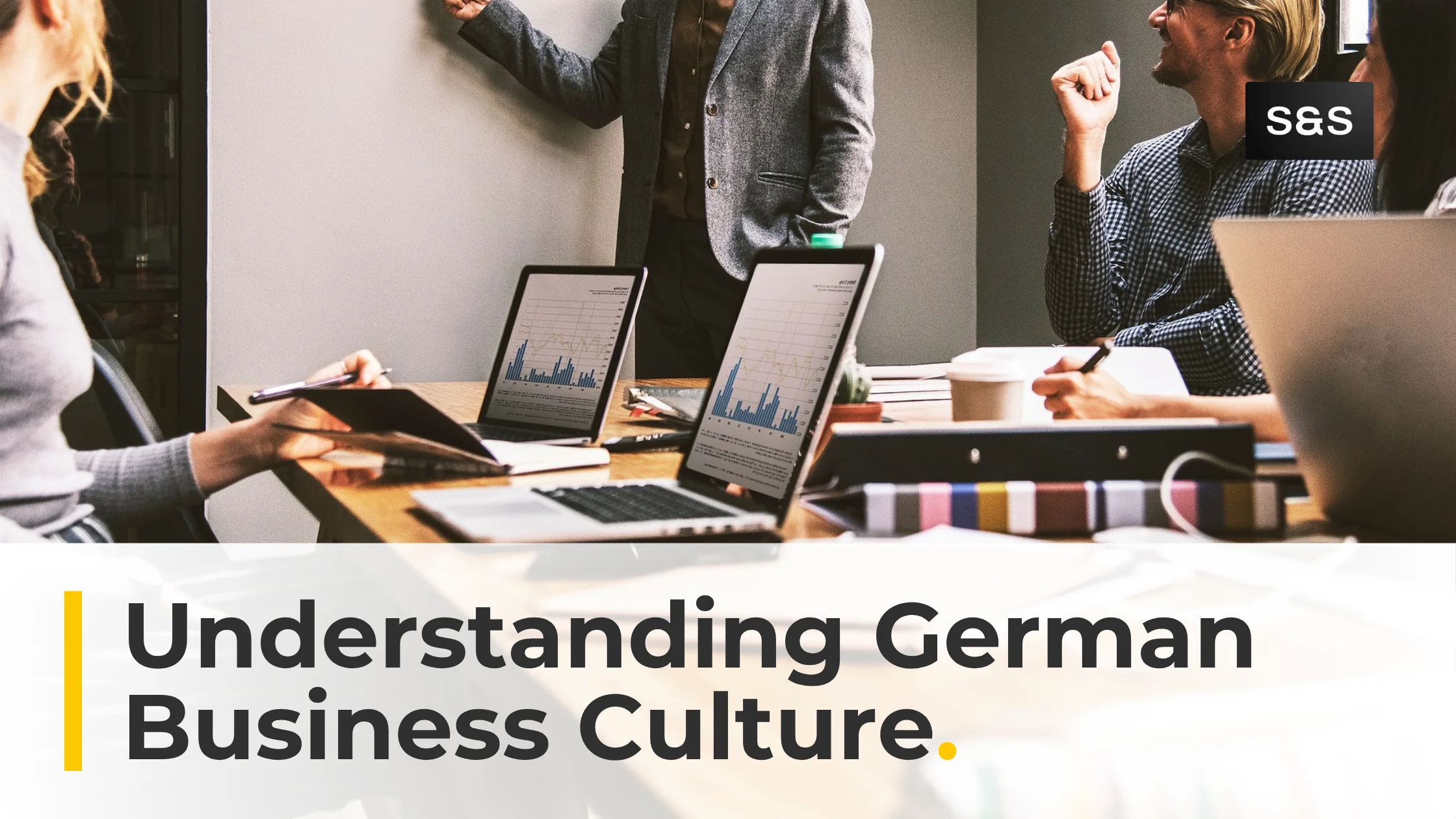
Business meetings in Germany typically follow structured formats with clear agendas distributed in advance. Punctuality is essential, with arriving even five minutes late considered disrespectful in most contexts. Meetings generally begin and end on time, with efficient use of scheduled periods.
Presentations should emphasize substance over style, with detailed technical information and data-driven arguments preferred over conceptual or visionary approaches. German business audiences typically expect comprehensive preparation and deep subject matter expertise rather than charismatic delivery or improvisational responses.
Decision-making rarely occurs during initial meetings, with Germans generally taking time to evaluate information and consult internally before committing to agreements. Follow-up documentation summarizing discussions and next steps is standard practice and should be provided promptly after meetings.
Relationship Building
While German business relationships emphasize professional rather than personal connections, relationship building remains important. This typically occurs in more structured contexts than in some other cultures, often through industry events, formal business dinners, or scheduled networking opportunities rather than spontaneous socializing.
Title and status awareness matters in relationship building, with academic titles like "Doktor" commonly used in business contexts. Addressing people by their family name with appropriate titles until invited to use first names remains standard practice, particularly with senior executives and in more traditional industries.
Trust development follows a distinct pattern in German business culture, generally built through demonstrated competence, reliability, and transparency rather than personal chemistry. Meeting commitments consistently, providing accurate information, and acknowledging limitations all contribute to establishing the trust necessary for successful business relationships.
Negotiation Approaches
Negotiation in German business contexts typically emphasizes factual arguments and logical progression rather than emotional appeals or relationship leverage. Proposals are generally evaluated on their objective merits, with detailed analysis of costs, benefits, and implementation requirements.
The German approach to negotiation generally focuses on finding fair, sustainable agreements rather than maximizing short-term advantage. Extreme initial positions or dramatic concessions often undermine credibility rather than advancing negotiations. Transparent, well-supported proposals with clear rationales typically prove more effective.
Technical specialists frequently participate directly in negotiations rather than leaving discussions to dedicated sales or procurement teams. Being prepared for detailed technical questions and having subject matter experts available during negotiations significantly enhances effectiveness when working with German companies.
Regional and Industry Variations
While certain patterns characterize German business culture broadly, significant variations exist between regions and industries. Understanding these differences helps tailor approaches appropriately.
Regional Differences
North-South variations remain noticeable in German business culture, with northern regions typically exhibiting more reserved communication styles and formal business protocols. Southern areas, particularly Bavaria, often combine strong traditional values with somewhat more expressive interaction patterns.
East-West differences persist as well, reflecting the country's historical division. Former East German regions continue developing distinct business cultures that blend traditional German values with different historical experiences. These areas often demonstrate greater pragmatism and adaptability alongside strong technical capabilities.
Urban-rural divides also influence business culture, with major business centers like Frankfurt and Munich, along with Hamburg, developing more internationally oriented approaches than smaller cities and towns. These metropolitan areas often serve as easier entry points for international companies due to greater exposure to diverse business practices.
Industry Variations
Traditional manufacturing sectors including automotive, machinery, and chemicals typically maintain more formal business cultures with hierarchical structures and established protocols. These industries often emphasize technical expertise, quality certifications, and methodical decision processes.
Technology and creative sectors, particularly in Berlin and other startup hubs, have developed more flexible business cultures that blend German thoroughness with more international and informal approaches. These sectors often move more quickly while still maintaining German expectations for quality and reliability.
Financial and professional services typically occupy middle ground, maintaining formality in client interactions while adopting more dynamic internal practices. These sectors often serve as bridges between traditional German business culture and international approaches.
Digital Transformation Impact
Germany's digital transformation has begun influencing business culture, creating new patterns while maintaining core values. Understanding these evolving elements helps international businesses navigate contemporary German business environments.
Virtual meetings have become more common, particularly for initial connections and regular updates. However, German preferences for structure remain evident in these formats, with scheduled meetings, clear agendas, and formal facilitation preferred over spontaneous calls.
Digital documentation has grown increasingly important, with German businesses typically expecting comprehensive electronic information sharing. This digital emphasis reinforces rather than replaces the traditional German focus on thorough documentation and information clarity.
Remote work adoption varies significantly across industries and companies, with traditional manufacturers generally maintaining more office-centric approaches while technology companies embrace greater flexibility. Even with remote arrangements, German expectations for reliability, availability during core hours, and clear communication persist.
Adapting Successfully
For international companies and professionals, successful adaptation to German business culture combines understanding with authentic engagement. Several approaches prove particularly effective:
Respect for processes demonstrates cultural awareness while building credibility. Following established procedures, providing requested documentation, and adhering to timelines signals alignment with German business values without requiring fundamental changes to your own business approach.
Communication adaptation, particularly regarding directness and detail level, significantly improves effectiveness. Providing clear, specific information with supporting evidence typically yields better results than conceptual or relationship-focused approaches, particularly in initial business development stages.
Patience and persistence remain essential when entering German business relationships. The evaluation process for new suppliers, partners, or service providers often takes considerably longer than in many other markets, with multiple interaction points before commitments. Companies that maintain consistent engagement throughout this extended process generally achieve better outcomes.
Local support, whether through German employees, representatives, or partners, substantially enhances market effectiveness. Beyond addressing language considerations, local representatives help navigate unwritten cultural expectations and provide contextual understanding that foreign-based teams might miss.
Looking Forward
German business culture continues evolving while maintaining its distinctive character. Several trends shape its current development:
Internationalization has influenced German business practices, particularly in multinational companies and technology sectors. This has introduced greater flexibility in some aspects of business culture while preserving core values like quality focus and thoroughness.
Generational shifts are gradually changing communication styles and hierarchical structures, with younger German business leaders often adopting more collaborative approaches. However, traditional German business values remain strong even as their expression evolves.
Sustainability focus has intensified in German business culture, adding new dimensions to quality expectations and long-term orientation. Companies that demonstrate environmental and social responsibility increasingly find alignment with evolving German business values.
Conclusion
Understanding German business culture provides a foundation for successful market entry and sustainable business relationships in Europe's largest economy. By recognizing and adapting to the distinctive patterns of communication, decision-making, and relationship building that characterize German business interactions, international companies can transform potential cultural barriers into competitive advantages.
While adapting to German business culture requires attention and effort, the results typically include more stable business relationships, clearer communication, and more predictable business processes. For companies committed to the German market, cultural understanding represents an investment that delivers returns throughout their market presence.
Need support navigating German business culture as part of your market entry strategy? Contact us to discuss how our cultural insights and local expertise can help your company build successful business relationships in Germany.
Frequently asked questions
What are the core values of German business culture?
German business culture rests on four foundational values: precision and structure (clearly defined processes, detailed documentation, punctuality), direct communication (factual and clear rather than diplomatic), quality focus (high standards in both outcomes and processes, often signalled through certifications), and long-term orientation (relationships built over months and years, not weeks). These values shape virtually every aspect of commercial interaction in Germany and tend to outweigh price or charisma as decision factors in B2B settings.
Why do Germans communicate so directly in business contexts?
Direct communication in German business reflects a separation between personal relationships and professional matters. Feedback is typically focused on specific issues rather than wrapped in positive framing because Germans value clarity and efficient problem-solving over diplomatic ambiguity. Foreign businesspeople sometimes initially perceive this as abrupt or rude, but it is rarely personal criticism. Germans generally appreciate similar directness in return, with clear statements of capabilities and limitations preferred over vague promises or oversold claims.
How important is punctuality in German business meetings?
Extremely important. Arriving even five minutes late to a German business meeting is considered disrespectful in most contexts. Meetings typically begin and end on time, with structured agendas circulated in advance and efficient use of the scheduled period. Punctuality is read as a proxy for reliability and respect for the other party's time, which are core values in German B2B trust-building. Foreign founders should plan to arrive 5-10 minutes early as a baseline.
How long does it take to build a German business relationship?
German business relationships develop over months rather than weeks. Initial business development typically takes longer than in many other markets because German companies thoroughly evaluate potential partners before committing: technical depth, financial stability, references, and cultural fit are all assessed in sequence. Sales cycles of 6-12 months are common for Mittelstand B2B engagements. Companies that maintain consistent, patient engagement through this extended evaluation tend to achieve materially better outcomes than those pushing for quick closes.
Do regional differences matter in German business culture?
Yes, meaningfully. North-South variations remain noticeable: northern regions tend toward more reserved communication and formal protocols, while southern areas (particularly Bavaria) combine strong traditional values with somewhat more expressive interaction patterns. East-West differences persist from the historical division, with former East German regions blending traditional German values with greater pragmatism and adaptability. Urban-rural divides also matter: Frankfurt, Munich, and Hamburg are more internationally oriented than smaller cities and often serve as easier entry points for foreign companies.
How does German negotiation differ from US or UK negotiation styles?
German negotiation emphasises factual arguments and logical progression rather than emotional appeals, relationship leverage, or aggressive opening positions. Proposals are evaluated on objective merits: costs, benefits, implementation requirements. Extreme initial positions or dramatic concessions tend to undermine credibility rather than advance negotiations. Technical specialists frequently participate directly in negotiations rather than leaving discussions to sales or procurement teams; being prepared for detailed technical questioning is essential. The goal is typically a fair, sustainable agreement rather than maximised short-term advantage.
Should I use formal titles like 'Herr Doktor' in German business?
Yes, particularly with senior executives and in more traditional industries. Academic titles like 'Doktor' (Dr.) are commonly used in business contexts and signal respect. The standard practice is to address people by their family name with appropriate title (Herr Müller, Frau Schmidt, Dr. Weber) until invited to use first names. Technology startups and Berlin's creative sector are more relaxed about this; traditional manufacturing, finance, and consulting tend to maintain stricter formality. When in doubt, start formal and follow your German counterpart's lead.
How is digital transformation changing German business culture?
Digital transformation is shifting some patterns while preserving core values. Virtual meetings are now common for initial connections and regular updates, but German preferences for structure persist: scheduled meetings with clear agendas remain strongly preferred over spontaneous calls. Digital documentation has grown more important and reinforces (rather than replaces) the traditional focus on thorough records. Remote work adoption varies by sector, with traditional manufacturers maintaining office-centric models and technology companies embracing greater flexibility. Expectations for reliability and clear communication remain unchanged regardless of format.
What is the biggest mistake foreign founders make with German business culture?
Treating relationship-building like a US-style sales cycle. Foreign founders frequently push for fast closes, oversell their offering, skip detailed technical preparation, and underestimate how much documentation German buyers expect. The result is loss of credibility before the relationship has had time to build. The second-biggest mistake is under-investing in German-language coverage and local presence; even one German-resident customer-facing team member materially improves close rates. The third is treating directness as rudeness and softening communication to the point of vagueness, which German counterparts often read as evasiveness.
Do I need German staff to succeed in the German market?
For most foreign founders entering Germany seriously, yes. Local support (German employees, German-resident representatives, or German partners) substantially enhances market effectiveness. Beyond language coverage, local team members help navigate unwritten cultural expectations, identify regional and sector-specific nuances, and provide contextual understanding that remote teams typically miss. Most successful foreign-founded businesses in Germany hire at least one German-resident customer-facing person within the first 6-9 months of serious market activity. For Mittelstand B2B sales, this is often the single highest-leverage hire.